
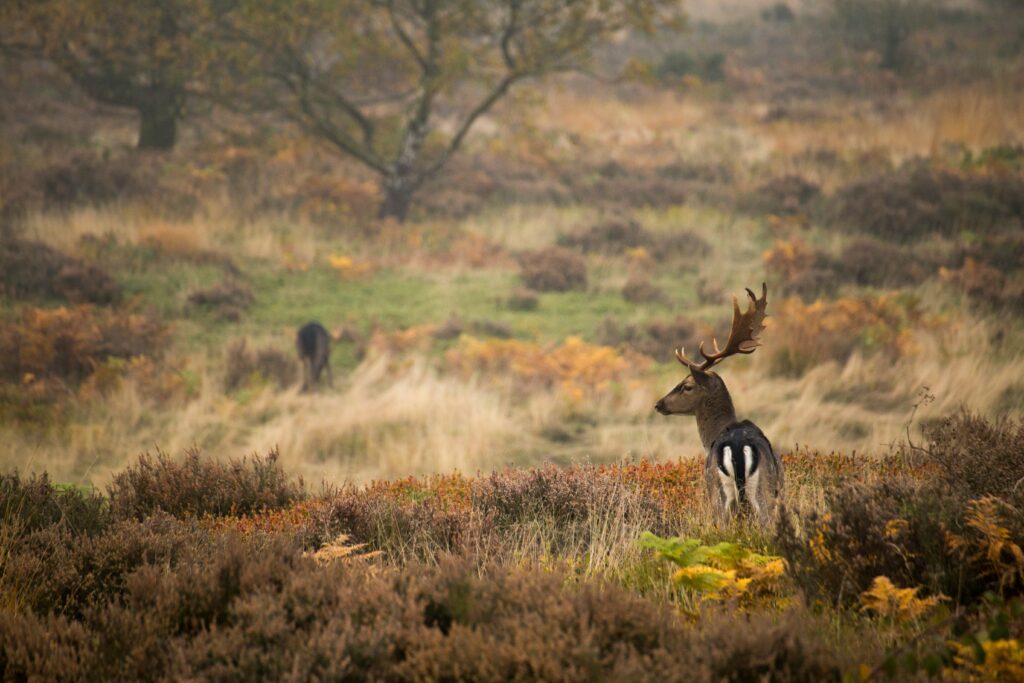
Cannock Chase District covers the towns of Cannock, Rugeley and Hednesford in the south of Staffordshire, along with much of the Cannock Chase National Landscape. Planning applications across the district are determined by Cannock Chase District Council as the Local Planning Authority (LPA).
Cannock Chase is a relatively small LPA but covers an area with an unusually large number of development restrictions. Around 60% of the district is Green Belt and a new Local Plan was adopted in March 2026. The district also contains the Cannock Chase Special Area of Conservation (SAC); a small area of protected heathland near the centre of the Chase with an associated surcharge for nearby developments. As well as these defined areas, much of the wider Cannock Chase National Landscape is located within Cannock Chase, one of just 46 Areas of Outstanding Natural Beauty across the UK.
This guide explains how applying for planning permission in Cannock Chase works and the main local factors to check before submitting your application.
The Planning Application Process in Cannock Chase
Most applications are submitted online to Cannock Chase District Council through the Planning Portal, then validated and determined. Alongside the national requirements (covered in our general guide to applying for planning permission), the district council has a specific set of local information requirements in its validation checklist.
The Process in Cannock Chase
Once received, your application is registered and checked for the correct forms, certificates, plans and supporting information. Cannock Chase also charges a nominal fee for invalid applications, payable if you wish to resubmit a corrected application.
After your application has been successfully validated, it is publicised for consultation, and neighbours and third-party consultees can comment through the council’s online planning register. Our guide to common neighbour objections has useful information on types of objections and how to prevent them. Your application will usually be determined by a planning officer, who will assess your scheme against the council’s development plan and national policy. Most applications are decided by officers under delegated powers, but larger or more sensitive schemes go to the Planning Control Committee, which is comprised of 13 members of the council.
Timetable for a Decision
Cannock Chase District Council follows the national statutory period for determining planning applications, currently eight weeks for homeowner applications and up to thirteen weeks for major developments. Our guide to planning permission timelines provides extensive detail on national rules and trends. Your decision notice will list any conditions to discharge before work begins. If the application is refused, you can resubmit an amended proposal or alternatively appeal to the Planning Inspectorate.
Planning Restrictions in Cannock Chase
Planning in Cannock Chase is shaped mainly by environmental designations and Green Belt. The constraints most likely to affect your application are the Special Area of Conservation (SAC), the National Landscape, the Green Belt and the district council’s adopted development plan.
The Cannock Chase SAC and Developer Contributions
The SAC is a local consideration for residential applicants. The SAC protects the most extensive lowland heathland in the Midlands and supports various protected animal and bird species. Whilst the designated area is small (4.9 square miles of heathland), all development within 15km (9.3 miles) of the SAC must pay a development surcharge per net new dwelling to fund protection and mitigation of the SAC, a fee that is index-linked and reviewed each April.
The Cannock Chase National Landscape
Part of the district lies within the Cannock Chase National Landscape, designated an Area of Outstanding Natural Beauty in 1958. It has the highest level of protection for landscape and scenic beauty. National UK policy places a high level of restriction on development in National Landscapes / AONBs. Development at scale is limited, and major development is generally refused except in exceptional circumstances.
If your site is located within the National Landscape area, it is likely that your application will need to take The Landscape’s Management Plan into account. Development near the boundary can also be refused where it would harm the Landscape’s setting, so if your site is located near to or adjacent to the National Landscape area you should expect a higher level of scrutiny on your application than would otherwise be the case.
Cannock Chase Green Belt
Just over 60% of the district is Green Belt, and any proposed development in these areas is likely to face additional restrictions. It is generally more challenging to gain approval for a new home in the green belt, with development allowed only in limited circumstances. The adopted Local Plan reaffirms protection for the Green Belt, and the National Planning Policy sets out key considerations to new development.
The Local Plan and Neighbourhood Plans
Applications are assessed against the adopted development plan. The Cannock Chase Local Plan 2018-2040 was adopted on 23 March 2026 and provides for around 264 new homes a year to 2040. Neighbourhood plans also apply in some areas, including Hednesford, Brereton and Ravenhill, Norton Canes and Cannock Woo. Importantly, check on the Cannock Chase District Council website for the latest neighbourhood plans prior to submitting your proposal.
Conservation Areas and Listed Buildings in Cannock Chase
Cannock Chase’s built heritage reflects its history as two market towns, Cannock and Rugeley. The district council’s building conservation pages cover conservation areas, listed buildings, scheduled monuments and the Local List, and a property’s heritage status is often central to how an application is decided.
Cannock Chase’s Conservation Areas
Cannock Chase District Council has eight key conservation areas, covering larger areas such as Cannock town centre and Rugeley town centre, and smaller areas such North Street in Bridgtown. In these areas the district council will assess applications more closely on design, materials and their effect on the built environment. Conservation Area Consent is required to demolish an unlisted building, permitted development rights are more restricted and trees are protected.
Listed Buildings
The district has around 70 listed buildings, seven of them Grade II*, from medieval churches and timber-framed buildings to brick buildings from its 19th-century mining boom. Examples include St Luke’s Church and the former Council House in Cannock, and the Grade II* Brindley Bank Pumping Station in Rugeley. If your property is listed, listed building consent may be needed as well as planning permission, including for internal works and minor alterations.
Check the Following Before Applying for Planning Permission in Cannock Chase
Prior to applying you should carefully review whether your site falls within the SAC’s 15km zone of influence, is within or adjacent to the National Landscape area or the Green Belt. These areas cover the majority of Cannock Chase District’s land. Whilst this is less likely given how contained these areas are, you should review whether your site is in a conservation area, listed or next to one of the scheduled monuments.
Beyond these local factors normal checks apply, such as whether your property’s planning history affects your permitted development rights (covered in our guide). You should carefully review your proposal against Cannock Chase District Council’s adopted Local Plan and any neighbourhood plan, and review nearby applications on the council’s online planning register to see how similar schemes have been handled. For sensitive or complex proposals, pre-application advice or early professional review can flag issues before submission.
How a Planning Consultant Can Help
Successfully applying for planning permission in Cannock Chase requires an understanding of both the national planning system and the district’s local constraints. An RTPI chartered planning consultant can review your site, identify the relevant restrictions, advise whether permission is needed, prepare a planning statement, and manage communication with the council.
Holland Lloyd is proud to be based in Cannock in the heart of the district, and we have considerable expertise on local planning issues. Whether you are planning an extension, building a new home, working on a conservation area property, navigating a Green Belt site or preparing a larger development, our Planning Support Service for Homeowners and Developers and Landowners Service can support your Cannock Chase application. Contact us today for advice and support.
FAQs
How long does the planning application process take in Cannock Chase?
Most householder and minor applications carry an eight-week statutory target, and major schemes carry a thirteen-week target. Allow extra time for validation before that period begins.
What is the Cannock Chase SAC developer contribution?
Most development creating a net new dwelling within 15km of the Cannock Chase SAC must pay a per-dwelling surcharge (£369.58 in 2026/27, plus a monitoring fee), secured by legal agreement before permission is granted. Check the council’s SAC page for the current figure.
Has Cannock Chase adopted a new Local Plan?
The Cannock Chase Local Plan 2018-2040 was adopted on 23 March 2026, replacing the 2014 plan and restoring the district’s five-year housing land supply.
Does Cannock Chase have conservation areas?
There are eight conservation areas, including the historic centres of Cannock and Rugeley and the Trent and Mersey Canal.