
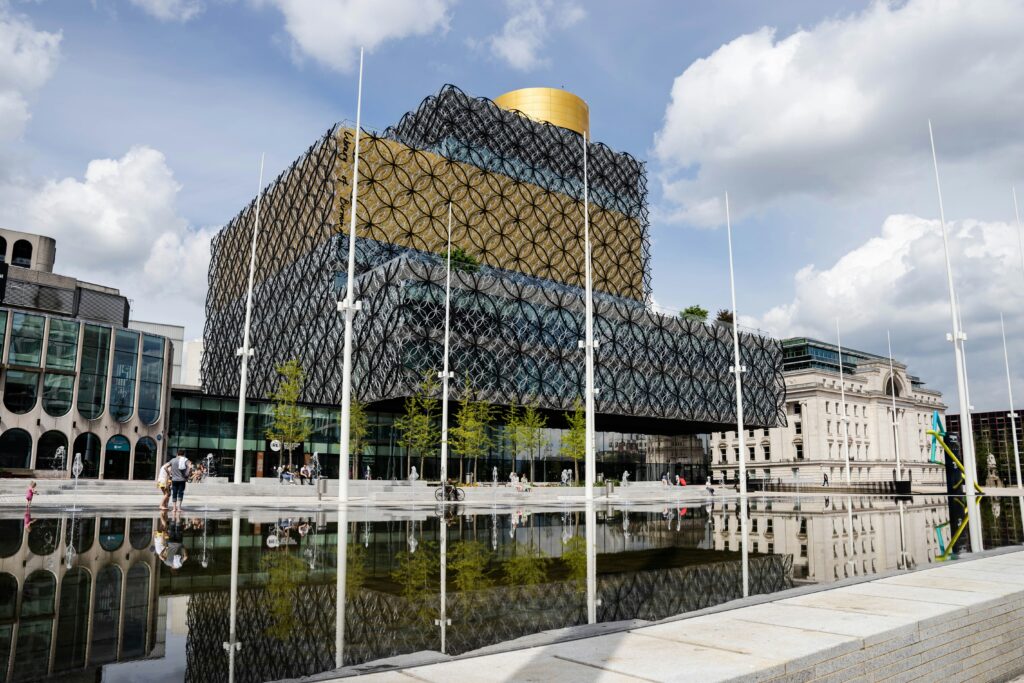
Birmingham is the second-largest city in the UK and the largest local authority in Europe by population. With a remit extending from Royal Sutton Coldfield in the northeast of the city to Rubery in the southwest, Birmingham City Council is the largest Local Planning Authority (LPA) in the United Kingdom.
The large size of Birmingham means that at any time of year Birmingham City Council is dealing with hundreds of planning applications of every conceivable type. Whilst making a planning application in Birmingham broadly follows the same process as any other LPA in England, the practicalities of applying are shaped by the city’s size, development plan and local planning controls.
A successful Birmingham planning application needs to be prepared with local constraints in mind, and an understanding that dealing with Birmingham City Council on planning matters may involve longer timelines and greater resource pressure than other LPAs. This guide explains how applying for planning permission in Birmingham works and relevant local factors to check before applying.
The Planning Application Process in Birmingham
Most Birmingham planning applications are submitted online through the Planning Portal, before being validated and determined by Birmingham City Council. Once submitted, your application will be checked to confirm that the required forms, drawings, certificates and supporting documents have been provided. If anything is missing or inconsistent, validation can be delayed.
As well as information specified in the national requirements (covered in some detail in our general guide to applying for planning permission), Birmingham City Council may require other items of information depending on your site and the type of application you are making. All of the information required is set out in the council’s Local Information Requirements for Planning Applications. Birmingham City Council also specifically notes that all planning applications for development creating new dwellings should include a specific Residential Standards Statement, following a template provided by the council.
Birmingham City Council provides an online planning system where applicants and neighbours can search for applications, view documents and track progress. The council also links applicants to its Planning Online system and GIS mapping tools, which are useful for checking the planning history of a particular property.
Once validated, your application will usually be publicised for consultation and reviewed against local and national policy. Following this process your application will be determined by a planning officer or, for some cases where the scheme is larger or more sensitive, by Birmingham City Council’s planning committee. The council states that the planning committee is responsible for determining around 10% of applications received by the council. The committee is currently comprised of 15 councillors drawn from the various political parties elected to the council.
For household applications, the statutory determination period is usually eight weeks, but Birmingham City Council has been running a significant backlog of applications for a number of years now, and there is a high likelihood of delay in validating your application. Depending on the details of the application validation is currently taking up to 6 weeks (some recent examples have been longer), and determination the full 8-week statutory period.
Once your application is determined you will be sent a decision notice by the council. Your decision notice will list any planning conditions that must be discharged before starting work. If your application has been unsuccessful the notice will set out the reasons. Following an unsuccessful application, you can re-submit an amended application or appeal.
Planning Restrictions in Birmingham
Birmingham has several local planning controls that can affect whether planning permission is needed and whether your application is likely to succeed. These controls are particularly important for HMOs, conservation areas and properties that are subject to Birmingham’s existing Article 4 Directions. An Article 4 Direction is posted by an LPA to remove a class of permitted development rights within a certain area, Birmingham currently has a number of these in force across the city.
The Birmingham Article 4 Direction on Small HMO Conversions
Since 8 June 2020, Birmingham has had an Article 4 Direction in force that removes permitted development rights for converting a family home (C3 dwellinghouse) into a small House in Multiple Occupation (C4 HMO) across the whole city council area. This means planning permission is required for a change from a family house to a small HMO accommodating between three and six people, even though that change may be permitted development in some other parts of England. Since large HMOs (7 or more people) have always required planning permission, Birmingham’s Article 4 Direction means virtually any HMO conversion in the city will require planning permission.
If you are a landlord or investor this may be a major local constraint. Areas with high student or shared housing demand, particularly including parts of Selly Oak and Edgbaston have long been a key investor target for acquisition and HMO conversion. The Article 4 Direction means planning permission is now very likely to be required for all HMO conversions in these areas.
Local Policy and Development Plan Documents
Planning applications in Birmingham are assessed against the relevant development plan and local planning documents, alongside national policy. Birmingham City Council publishes local plan documents, planning guidance and strategies, including the Birmingham Development Plan and Development Management in Birmingham documents. These are important because they shape how your application will be assessed on matters such as design, housing, amenity, transport and local character.
Conservation Areas and Listed Buildings in Birmingham
Birmingham is a historic British city, and a significant number of buildings in Birmingham were constructed prior to 1920, even allowing for the widespread city-centre clearances of the 1960s-1970s. As a result, it has a significant number of listed buildings and large conservation areas.
Birmingham’s Conservation Areas
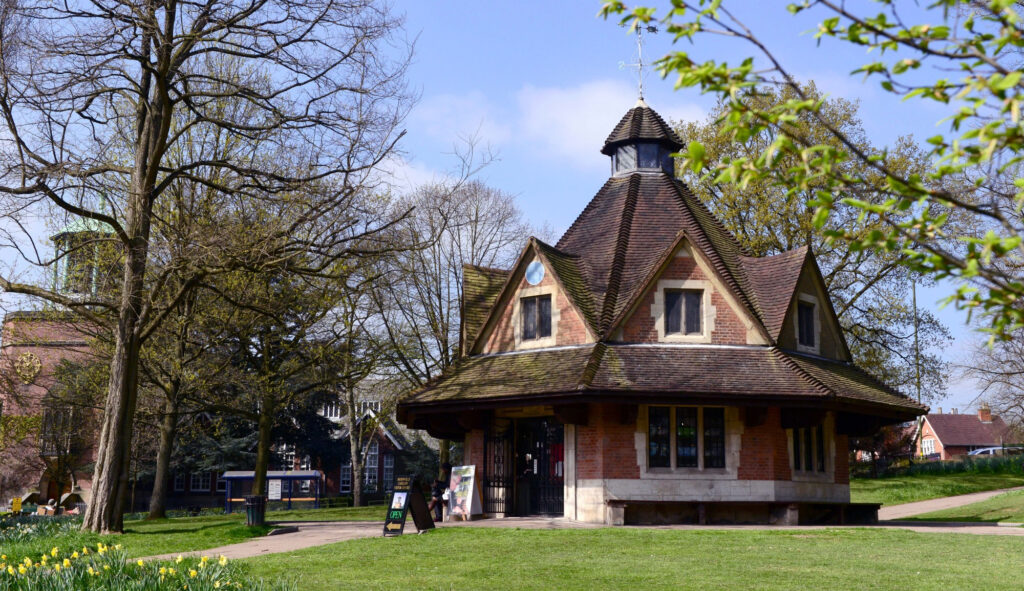
Birmingham City Council states that there are 29 conservation areas in the city, including the Jewellery Quarter and Bournville Village. The Jewellery Quarter is noted for its surviving group of Victorian and early twentieth-century jewellery workshops, while Bournville Village is recognised as an internationally important model village dating from the late nineteenth century.
Prior to making a planning application in Birmingham you should check whether your property is listed or is located within a conservation area in Birmingham. Even if your property is not a heritage asset, you may face permitted development restrictions if it is located in a conservation area. The council provides conservation area documents for different parts of the city, including maps, design guides and designation reports. If your property is located in one of Birmingham’s conservation areas, you should review the documents for your area carefully prior to preparing your plans and application.
Additional Conservation Area Controls in Birmingham
Several conservation areas in Birmingham have additional controls issued under Article 4(2), including Bournville Village Conservation Area, Sutton Coldfield High Street and Moseley. Article 4(2) notices are designed to restrict permitted development rights in a conservation area. If your property is located in a conservation area with an Article 4(2) notice you may need to apply for planning permission for minor alterations such as replacing windows or re-roofing. Restrictions are particularly extensive in some areas such as Bournville, where even front door colours must be approved shades.
Listed Buildings in Birmingham
If your property is listed, listed building consent may be required as well as planning permission. This applies to works that affect the special architectural or historic character of the building, including internal works in many cases. Birmingham’s conservation area documents also identify statutory listed buildings and locally listed buildings in specific areas. Our guide to listed building consent and planning permission explains how listed building rules operate and why they need to be considered separately from standard planning permission.
Check the Following Before Applying for Planning Permission in Birmingham
A strong Birmingham planning application should start with a full review of your property. This means checking whether your property is in one of the 29 conservation areas, whether Article 4 or Article 4(2) restrictions apply, whether the proposal affects a listed or locally listed building, and whether the planning history creates any additional constraints.
It is also sensible to check nearby planning applications before submitting. Birmingham’s Planning Online system allows you to search previous applications and see how similar proposals have been handled locally. This won’t guarantee the outcome of your own application, but it can help identify likely issues before submission.
How a Planning Consultant Can Help
Successfully applying for planning permission in Birmingham requires an understanding of both the national planning system and Birmingham’s local constraints. An RTPI chartered planning consultant can review your site, identify local restrictions, advise whether planning permission is needed, prepare a robust planning statement and manage communication with Birmingham City Council. Where a proposal is sensitive, early advice can also help decide whether amendments, pre-application engagement or additional supporting evidence are likely to be needed.
At Holland Lloyd, we have an extremely strong track record in Birmingham, including successful applications for notable commercial developments in the Gun Quarter, Jewellery Quarter and City Centre. Whether you are planning an extension, constructing a new home, working on a conservation area property or preparing a larger commercial development proposal, our Planning Support Service for Homeowners and Developers and Landowners Service can support your Birmingham planning application.
FAQs
How long does planning permission take in Birmingham?
The normal national target is eight weeks for most householder and minor applications, but Birmingham City Council has a longstanding backlog of applications. Presently, applicants should allow for significant delays, especially at validation.
Do I need planning permission for an HMO in Birmingham?
Birmingham’s city-wide Article 4 Direction has removed permitted development rights for converting a C3 dwellinghouse into a C4 small HMO, meaning planning permission is required for virtually all HMOs.
How do I check if my property is in a Birmingham conservation area?
Birmingham City Council provides conservation area documents and maps through its website, including specific documents for areas such as Bournville Village, the Jewellery Quarter and other designated conservation areas.
Can Holland Lloyd help with planning permission in Birmingham?
Holland Lloyd has a strong track record in Birmingham and our significant local expertise makes us particularly well-placed to advise homeowners and developers on applications in the area.