
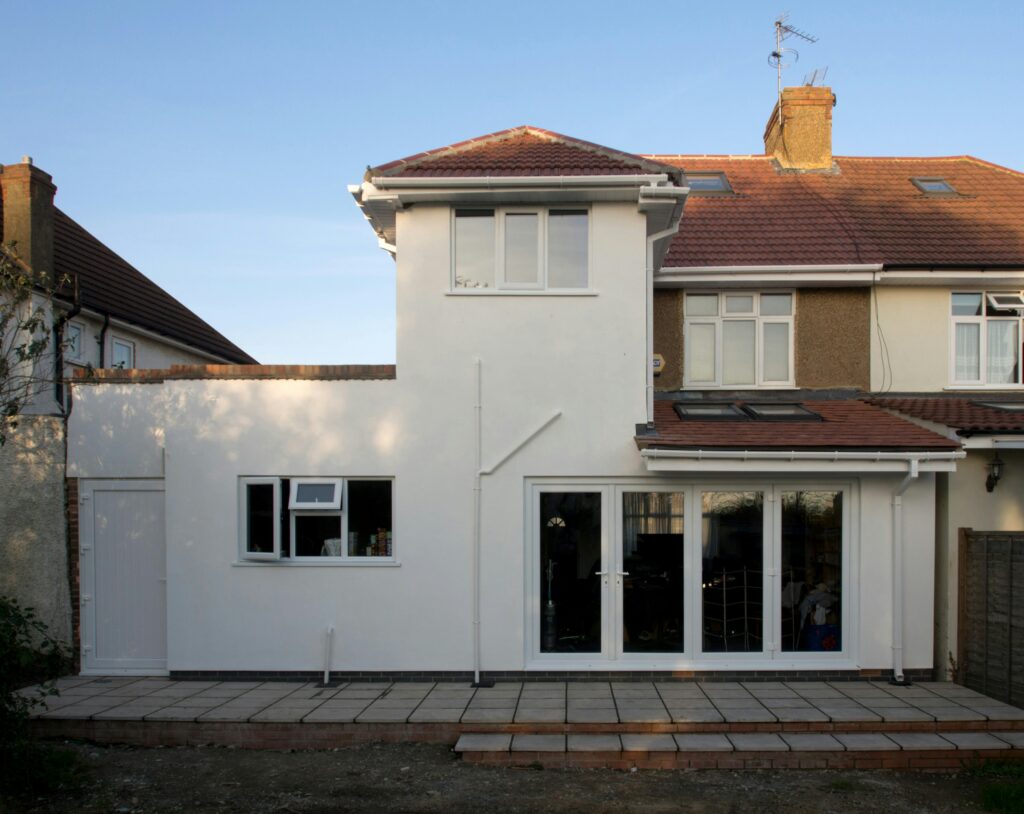
Gaining retrospective planning permission for a development can be an effective way to resolve enforcement action by your Local Planning Authority (LPA). However, the process is likely to be less straightforward than preparing a full planning application or making a retrospective application prior to a breach being enforced.
This guide covers how retrospective applications work in the context of enforcement action, what happens if a retrospective application is refused, and how recent changes to the appeals process should be accounted for when preparing a retrospective application.
Enforcement Action & Applying for Retrospective Planning Permission
Retrospective planning permission allows you to seek approval for development that has already been carried out. It is a recognised part of the planning system and is expressly provided for within planning law. However, applying retrospectively does not prevent enforcement action from continuing, particularly where the LPA considers your development to cause planning harm.
In practice, making a retrospective application after an investigation or informal enforcement action has begun is relatively common, since retrospective applications are often submitted after an issue has been identified by the LPA. This may follow early-stage investigation or informal enforcement steps. Where an enforcement notice has already been issued, the situation becomes much more complex, and the interaction between your application and any appeal rights needs to be carefully managed.
Our article on planning enforcement time limits provides useful background on how LPAs approach breaches and when action can be taken, which is relevant when deciding whether a retrospective application is the best strategy.
Retrospective Application Process
Unless you have already been served with an enforcement notice, the process for submitting retrospective planning permission is broadly the same as a standard application, and we cover the process for this in detail in our guide to preparing a planning application. You will need to prepare drawings, submit supporting documents (including photographs of your development), complete the application form and provide a clear planning justification via the Planning Portal.
Planning Justification
An important part of preparing a retrospective planning application is providing a clear justification for the unauthorised works carried out. Successful applications need to demonstrate that the development adheres to planning policy, does not cause negative impacts on neighbours and is a positive contribution to the local area. It is also helpful if evidence can prove that the planning breach took place in good faith. Third parties will also be consulted as with a standard application. Our neighbour objections guide is a useful resource here.
Typically good faith breaches are technical or accidental, e.g. minor height infringements on a development that would have otherwise fallen under permitted development rules. Good faith doesn’t apply if it’s clear that the development contravened planning rules from the outset, no attempt was made to seek planning permission for a development that obviously required it, or action was taken to conceal the breach.
In general, the key difference with applying retrospectively after enforcement action has started is the context in which the application is being assessed. Because a breach has already occurred, your LPA will typically examine the development forensically and with a clearer focus on any harm that may have arisen. This doesn’t mean your retrospective application will be judged more harshly versus policy, but it does mean that gaps or issues with design, justification or supporting information are more likely to be exposed.
Impact on neighbouring properties
Your LPA will look closely at how the development affects neighbouring amenity, including issues such as overlooking, loss of light, scale and massing. Where harm is identified, it is more difficult to justify retaining the development without modification.
Policy compliance
As with any planning application, the proposal must comply with the development plan and relevant national policy, including the National Planning Policy Framework. A retrospective application has to meet the same policy thresholds as a conventional one.
Whether the development would have been approved originally
A key question often considered in practice is whether the scheme would have been acceptable if it had been submitted in advance. A retrospective application is unlikely to succeed without amendments if the answer is negative.
Differences if you’ve already been served an enforcement notice
If you have already been served an enforcement notice, the LPA can decline to determine your retrospective application. Given that generally you will only have 28 days to comply with the enforcement notice and a retrospective application can take 8-12 weeks to determine, it’s important to discuss any prospective application with your LPA prior to proceeding with one. Appealing the enforcement notice and arguing that planning permission should have been granted (Section 174 ground (a)) may be feasible in these circumstances, however since April 2024 that route has been restricted if the retrospective application relates to a development for which a related planning application ceased to be under consideration in the last two years.
Managing Refusal & the Appeals Process
If retrospective planning permission is refused, your next steps depend on whether enforcement action has progressed to the point of a formal notice. Where no enforcement notice has been issued, you can appeal the refusal under Section 78 of the Town and Country Planning Act 1990. This is the standard appeal route and focuses on whether planning permission should be granted based on the merits of the proposal.
Where an enforcement notice has been issued, as noted above you may appeal the notice under Section 174, including on ground (a), which argues that planning permission should be granted. This effectively turns part of the appeal into a deemed planning application.
The Planning Inspectorate’s procedural guidance sets out how Section 174 appeals are handled and the restrictions that can apply, particularly where a retrospective application has already been made. Our guide to planning enforcement notices covers Section 174 appeals in detail.
Recent Changes to the Appeals Process
Recent changes to planning appeals have made it more important than ever to get your initial application right, particularly for retrospective planning applications which have a higher likelihood of refusal. From April 2026, updated procedures for planning appeals under Section 78 have introduced a more structured and front-loaded process. The Planning Inspectorate now places greater emphasis on the material submitted as part of your original application, and scope to amend proposals or introduce new evidence once an appeal has been made is very limited.
Most appeals made in relation to applications submitted on or after 01/04/2026, will follow the part 1 Written Representations procedure (see section 9). In the part 1 procedure, the appellant is not able to submit evidence at appeal not previously considered by the LPA when they determined the application. Planning Inspectorate
In practical terms these changes raise the difficulty bar for any appeal under Section 78 and make it even more important to prepare a comprehensive and well-justified retrospective application.
How a Planning Consultant Can Help
Successfully applying for retrospective planning permission after enforcement action is possible but requires careful strategy and execution.
A planning consultant can assess whether a retrospective application is likely to succeed and prepare a robust planning case that addresses the concerns of your LPA. If permission is refused, they can guide you through the appeal process, ensuring your initial application is well-structured, supported by appropriate evidence and best-placed to support any appeal required given the restrictions imposed by the new rules.
At Holland Lloyd, we regularly advise homeowners, landowners and developers on enforcement action and retrospective planning applications. Whether you need to submit a retrospective application, respond to an enforcement notice or prepare an appeal, our Planning Support Service and Developers and Landowners Service provide clear, practical advice to help resolve issues and protect the value of your property. Contact us today for advice.
FAQs
Can you apply for retrospective planning permission after enforcement action?
Retrospective applications can be made at any stage, including after enforcement action has begun. However time restrictions differ if an enforcement notice has already been issued and other routes to regularise your development may be more practical.
Does applying retrospectively stop enforcement action?
LPAs can choose to continue enforcement proceedings while considering your application, particularly where they consider the development to cause harm.
What happens if retrospective planning permission is refused?
You may be able to appeal the refusal or appeal an enforcement notice on ground (a). However, restrictions may apply depending on the timing of your application and enforcement action.
Are retrospective applications treated differently?
Retrospective applications are assessed against the same planning policies as standard applications, but are usually subject to close scrutiny due to the existence of a breach.
Do recent appeal changes affect retrospective applications?
Yes, particularly where a refusal leads to a planning appeal. New procedures limit the ability to introduce new evidence at appeal stage, beyond that which was submitted with the original application.