
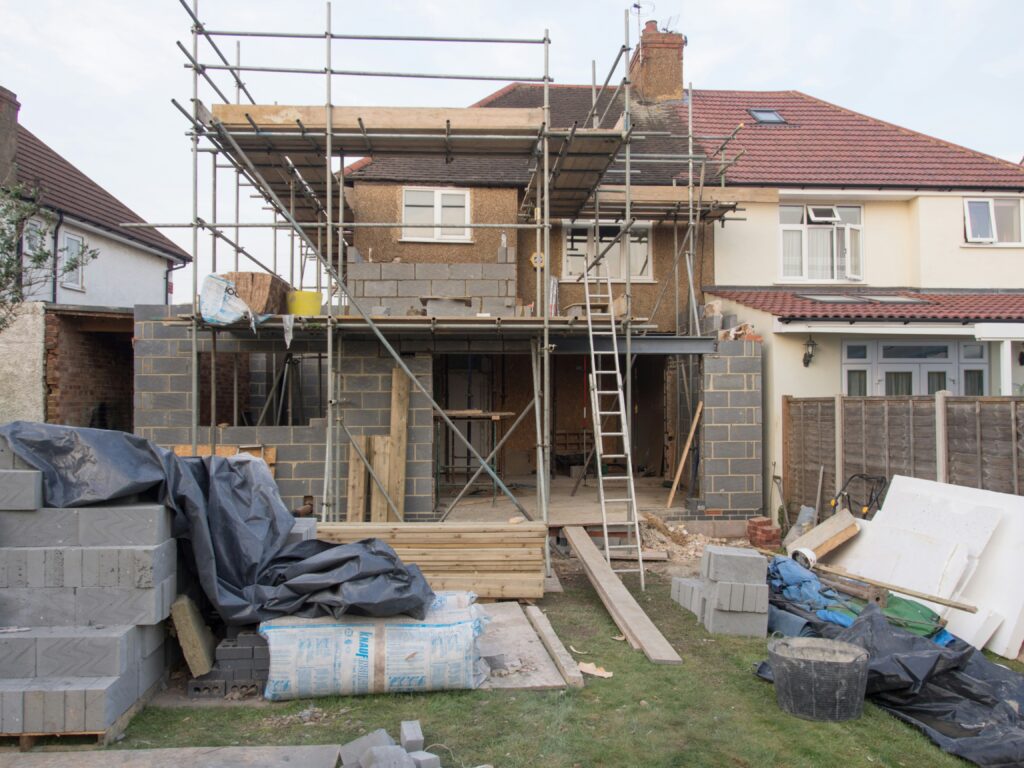
Understandably, many homeowners would prefer to avoid the cost and consultation required when submitting a full planning application for property development. Depending on the scale of your project it may be possible to carry out works to achieve your vision without applying for planning permission.
If you are planning a project under permitted development understanding what you can build, the process involved, and common pitfalls to avoid is essential to maximise and protect the value of your investment. This guide explains when planning permission is not required, how permitted development rights operate, and practical steps you can take to improve the value of your property without applying for full planning permission.
When Can You Build Without Planning Permission?
Permitted development rules were originally introduced in 1948 with the aim of simplifying the planning process for small changes to properties. Since then, they have been repeatedly replaced and amended by subsequent laws. The most current version of the rules were laid down in the 2015 GDPO and state that you can build extensions, loft conversions, or outbuildings within certain limits.
You can usually build single-story rear extensions within size and design limits, convert lofts to habitable rooms within volume and size allowances, install solar panels and construct certain outbuildings without planning permission under permitted development rights.
However, permitted development rights can be removed or heavily restricted based on the type of property you own or the area you live in. Common situations where permitted development rights are disapplied include:
- Most work to listed buildings. Our guide to planning permission for listed buildings covers this specialist area in some detail.
- Developments in conservation areas and Areas of Outstanding Natural Beauty
- Development of flats or maisonettes
- Previous grants of planning permission that removed permitted development rights
- Properties where an Article 4 Direction has removed permitted development rights. Article 4 Directions are made by your LPA and typically remove an entire class of rights from the area covered by that LPA. These are relatively common, for example Birmingham City Council introduced an Article 4 Direction in 2020 removing the right to convert a family home to a small HMO.
Before assuming your project qualifies as permitted development, it’s essential to check your property’s planning history, location, property type and local rules. Thorough checks can help accidentally breaching planning control. Understandably this can feel daunting, and if you require support with this process our Planning Support Service can help.
Permitted Development Rights
Permitted development covers a wide range of common household improvements. These rights are split into various categories of development within the GPDO.
Rear Extensions
Some rear extensions can be built without planning permission, provided they comply with restrictions on the depth of the extension, total height, eaves height, proximity to boundaries and materials. While single-story permitted development extensions are more common, it is possible to develop two-storey extensions to the rear of your property.
For larger rear extensions (depth and height limits), the Neighbour Consultation Scheme may apply, under which your LPA is required to notify and consult with your neighbours. If any of your neighbours object then the LPA may refuse approval of your development.
If your rear extension is likely to fall under the scope of the Neighbour Consultation Scheme then formulating a strategy to prevent and manage neighbour objections is advisable. Our guide to neighbour objections covers the essential components of an objection management strategy.
Loft Conversions

Loft conversions are permitted development if they fall below specific cubic volume limits, avoid raising the roof ridge, and maintain adequate distances from eaves. Rooflights are generally allowed, but dormers facing the highway typically require planning permission.
Outbuildings
Garden buildings can fall within Class E permitted development rules if they are used for ‘purposes incidental to the dwellinghouse’. In practice this usually means constructing a flexible garden room, outdoor studio, office or gym. Restrictions include height limits, area covered versus size of garden and positioning of your building.
Alterations and Improvements
Some external works, including replacement windows, new doors, roof replacements and solar panels, may be permitted development, though rules vary by design and setting.
Even where permitted development applies, it is often sensible to obtain a Lawful Development Certificate, especially if you intend to sell or remortgage in future. Our guide on Lawful Development Certificates explains how these applications work and when they are advisable.
Avoiding Common Pitfalls of Building Without Planning Permission
Key risks include exceeding size and volume limits, building too close to boundaries, using non-matching materials or missing local rule changes. Permitted development rules can change frequently on a national and local basis and it’s important to conduct thorough checks before proceeding with your project.
If you believe your project is substantial enough to require planning permission, our How to Apply for Planning Permission guide can help you understand the process and supporting documents required for a full planning application.
Maximising Your Property’s Potential & Adding Value
Leveraging permitted development rights is a common way for homeowners to achieve their vision for a property with enhanced usability and value.
Optimising Layout Through Permitted Development
Internal alterations and garage conversions can unlock additional living space and make existing space work more efficiently. If you live in an older property and plan to carry out internal alterations it’s important to first check your property’s listing status. As discussed, certain rear extensions can also qualify as permitted development.
Adding An Extra Bedroom
A loft conversion is a common way of adding a sizable extra bedroom to a property, and a large proportion of loft conversions in the UK are carried out under permitted development. Depending on design, rooflight and dormer loft conversions can usually meet permitted development rules.
Creating Usable Spaces in Your Garden
Well-designed outbuildings can provide you with home working space or leisure facilities, increasing functional living area without altering your main property. Outbuildings that meet the required dimensional and positioning requirements can be an efficient way to enhance the usability and value of your property.
Enhancing Your Property’s Grounds
Decking, patios, boundary treatments and landscaping improvements rarely (but, importantly can) require planning permission unless your home is listed or they are positioned at the front of your property.
How a Planning Consultant Can Help
It’s important to carry out thorough checks to ensure that a project carried out without planning permission under permitted development rules is lawful. A planning consultant can help by:
- Reviewing proposed works to confirm whether permitted development is applicable or planning permission is required
- Preparing a Lawful Development Certificate application, either for a proposed or completed development
- Guiding projects in conservation areas, or where permitted development rights have been removed
- Switching to assisting with a full planning application if you decide your vision requires a more extensive development
At Holland Lloyd, our Planning Support Service helps homeowners achieve their vision for any scale of development. We provide clear, practical advice tailored to your project and goals. Contact us today for advice and support.
FAQs
What can I build without planning permission?
Certain extensions, loft conversions, outbuildings and alterations are allowed under permitted development, provided they meet the General Permitted Development Order rules.
Is building without planning permission illegal?
Only if the works required planning permission and no application was approved by your Local Planning Authority. If your project meets permitted development criteria, no planning permission is needed.
How do I check if permitted development rights apply?
You should carry out checks on your planning history, location and property type. Rights may be restricted by conservation area status, listing, an Article 4 Direction or the specific development history of your property.
What happens if my development accidentally exceeds permitted development limits?
Your Local Planning Authority may take formal enforcement action, but in practice most LPAs seek to remedy small breaches on an informal basis. You may need to submit a retrospective planning application, please contact us for advice if this is required.
Should I apply for a Lawful Development Certificate?
A Lawful Development Certificate isn’t required when building under permitted development, but it may simplify a future sale of your property and lender checks on refinancing.