
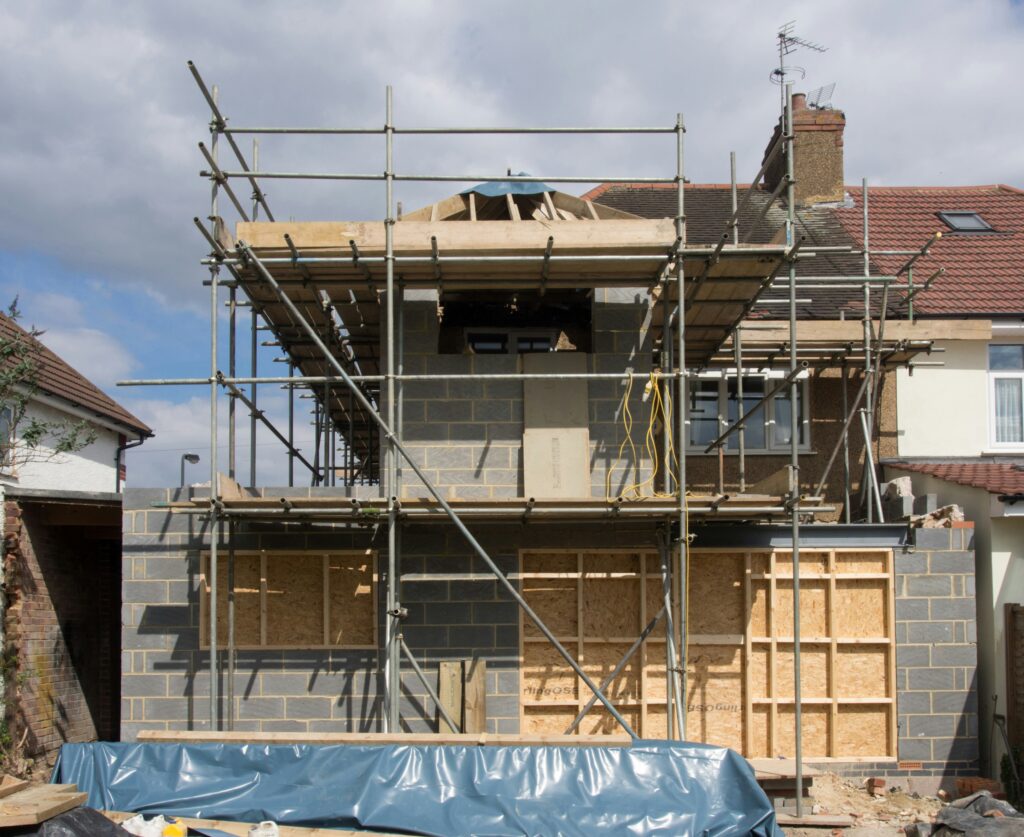
It isn’t uncommon for the requirements of a project to change after planning permission has been granted. Practical issues with the build, new cost considerations or needs evolving along with design requirements can lead to changes being considered during construction, or before you have commenced work.
As a grant of planning permission is tied to the approved drawings and decision notice, any departure from those approved plans needs careful consideration. Making changes without approval could place a development in breach of planning control.
In this guide we explain when and how planning permission can be changed, the formal routes available, and how to make the changes you need whilst staying compliant and avoiding future issues.
What is a Change in Planning Permission?
A change in planning permission occurs when development is carried out in a way that differs from the approved drawings or conditions attached to a planning decision. What qualifies as a change depends on your development plans, but can include changes to items like layout, size, appearance, materials or positioning.
Not every change requires a new planning application. The correct process to follow generally depends on how significant the change you are seeking to make is. Broadly, changes fall into three categories: very minor changes (non-material), changes that affect approved details but not the principle of development (minor material), and changes that are substantial enough to require a new application (material).
Essential Steps to Follow
Review your Approved Permission
The best starting point for making change is to re-review your decision notice and approved plans. Planning permission only applies to what has been expressly approved. Planning conditions often require development to be carried out in accordance with specific drawings or approved details, particularly in relation to items like materials, windows and layout. Our How to Apply for Planning Permission guide covers the full detail of what planning permission applies to.
After reviewing your approved documents, you will need to assess your changes to start the process of formally seeking approval for them.
How to Check if Your Change is a Non-Material Amendment
Where a proposed change is genuinely minor (typically very small), it may be possible to apply for a non-material amendment under Section 96A of the Town and Country Planning Act 1990.
A non-material amendment allows small changes to be approved without submitting a new planning application. There is no statutory definition of what qualifies as non-material, so your Local Planning Authority (LPA) will make a discretionary judgement based on information you submit about the alteration you intend to make, local policy and guidelines.
Generally, any change that alters the scale, footprint, height or impact on neighbours of your development is unlikely to qualify as a non-material amendment. As what will be accepted depends on the judgment of your LPA, using your LPA’s pre-application advice service to get an opinion before applying can be helpful and subsequently save time.

National guidance on non-material amendments is set out on the Planning Portal, which explains how applications are assessed and the types of changes that may be considered acceptable. Bear in mind that there is no right of appeal if a non-material amendment application is refused. If the authority considers the change to be material, the alternative will usually be a Section 73 application (if the change is covered by a planning condition you can remove or vary) or a fresh planning application.
Considering a Section 73 Application
Where a non-material amendment application isn’t a viable route, it may be possible to seek to change your planning permission via a Section 73 application. Section 73 of the Town and Country Planning Act 1990 allows an applicant to apply to vary or remove conditions attached to an existing grant of planning permission. Where an application has been approved with far-reaching conditions (e.g. covering layout, appearance, parking) a Section 73 application can be used to apply for changes to those conditions and thereby implement ‘minor material’ changes.
It is important to note that under a Section 73 application, the description of the development cannot be altered.
Following a successful Section 73 application, you will have a new grant of planning permission (and decision notice) issued. Typically, the new decision notice will re-implement most of the original conditions attached to the original grant of planning permission, with amendments where relevant.
Making a Fresh Planning Application
If your proposed changes materially affect the scale or impact of your development, and your change doesn’t relate to a planning condition, a fresh planning application may be the best or only option available to you.
A fresh application confers the key advantage of allowing any type of change to your previous grant of planning permission, subject to local restrictions and policy. As long as you don’t carry out any works that could invalidate your previous application or miss your commencement deadline your previous grant of planning permission will also remain valid.
It’s worth bearing in mind that your previous successful application is a material consideration by your LPA when determining the success of your latest application, which may be an advantage or disadvantage depending on the planning history of your site and whether your initial application was contested or not. Our How to Apply for Planning Permission Guide covers the full process from start to end.
Common Issues When Changing Planning Permission
The main issue to avoid when changing planning permission is assuming a change is too small to matter or missing off a necessary application. Although changing planning permission can be a complex process, following available legal routes can help to keep things running smoothly and avoid wasted time or unnecessary enforcement action.
Good communication and project management among stakeholders is also important, since changing planning permission can leave you with multiple grants (e.g. following a Section 73 application approval). Good communication can avoid issues with contractors and tradespeople accidentally working from old or invalid plans.
How a Planning Consultant Can Help
Successfully changing planning permission can be a complex process. Where changes are more complex, a well-worked strategy for changing planning permission and strong project management through the process will help keep your project on track. A planning consultant can assess proposed changes, manage applying for a non-material amendment, assess and apply for a Section 73 application, or craft and submit a fresh planning application.
At Holland Lloyd, we regularly assist homeowners who need to amend approved schemes before or during construction. Our Planning Support Service provides clear advice on the most appropriate route and helps keep projects compliant and on track.
FAQs
Can I change my plans after planning permission is granted?
Yes and changes to existing planning permission are relatively common, but the correct route for getting changes approved depends on the scale and nature of the change.
What is a non-material amendment?
A non-material amendment is a formal approval for small changes that do not materially alter the approved development. What qualifies depends on your approved plans and the policies and procedures of your local planning authority.
What is a Section 73 application?
A Section 73 Application is an application to vary or remove planning conditions, which can be used to change planning permission where the intended change is covered by an existing planning condition.
Is my previous approval relevant if applying for fresh planning permission?
Yes, because prior planning history is a material consideration when determining an application, your prior approval is relevant. If your change is material but not substantial your prior approval may be helpful to your new application.